Soil testing for stabilised temporary works decommissioning

Soil Stabilisation Decommissioning

Decommissioning and Restoring Stabilised Soil to its native state

Furlong GS uses a testing-led decommissioning strategy for stabilised haul roads and temporary working areas, comparing the natural, treated and regenerated soil states so reinstatement works can be targeted, measurable and sustainable.

Soil Analysis and Knowledge based Reinstatement

Temporary stabilised haul roads are designed to perform during construction, but the decommissioning stage needs equal care. Stabilisation can raise pH, reduce organic matter, change soil structure and reduce microbial activity.

Our approach starts by understanding the baseline soil condition before temporary works are installed. The same physical, chemical and biological indicators are then reviewed after stabilisation and again after regeneration, creating a clear target for reinstatement.

The Decommissioning Strategy

DECOMSTRAT is built around baseline testing, treated-soil comparison and measurable regeneration

3

soil states tested: natural untreated, binder treated and regenerated

42

TerraMap Gold parameters covering chemical, biological and physical condition

7.2-7.4

recorded natural pH range before cement treatment in the presentation data

7.9-8.1

elevated pH range after cement treatment, requiring remedial action

01

Soil testing pre-construction work

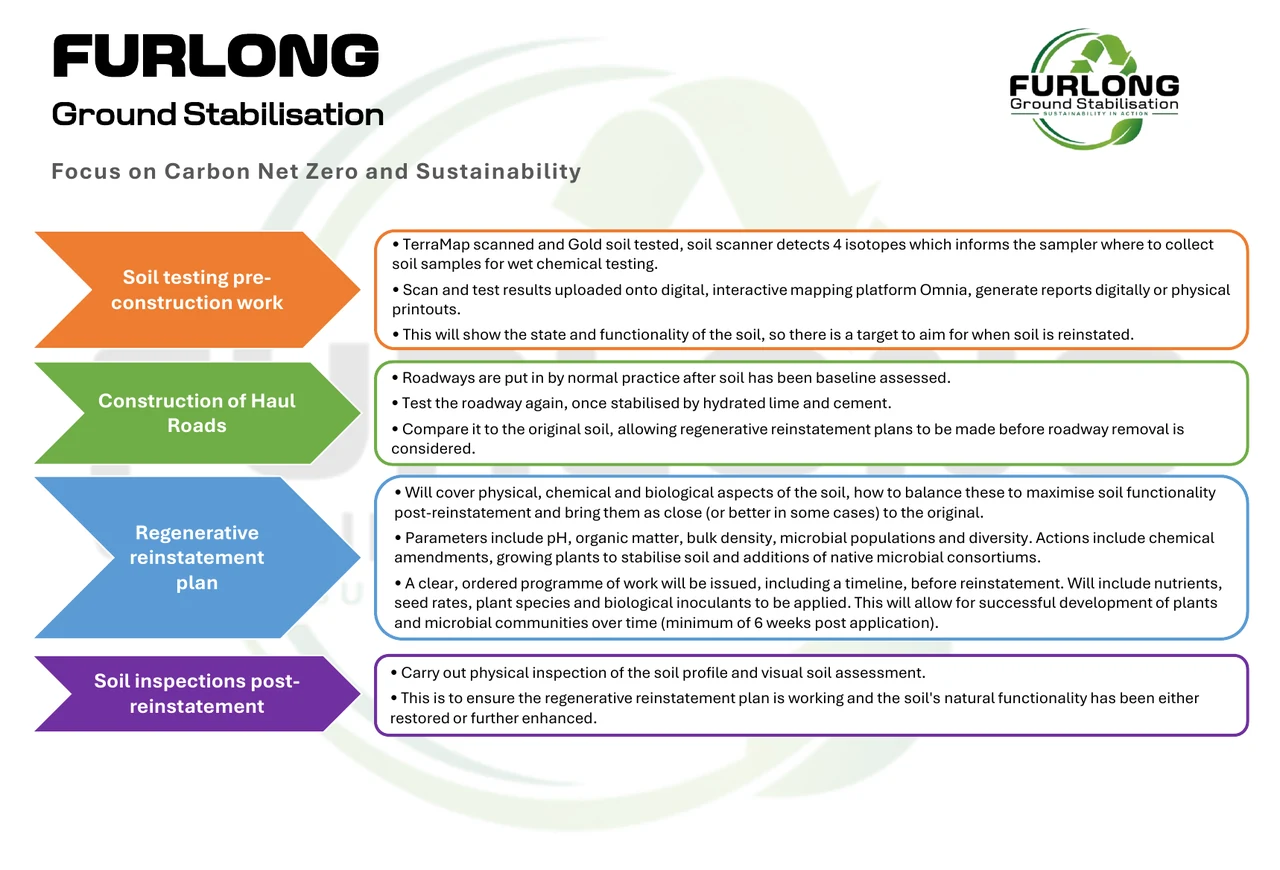
TerraMap scanning and Gold soil testing establish the state and functionality of the existing soil before temporary works are installed. The scan detects isotope variation and informs where wet chemistry samples should be collected.

02

Construction and treated soil testing

Haul roads are installed after baseline assessment, then tested again once stabilised with hydrated lime and cement. This gives Furlong GS a before and after comparison before removal is considered.

03

Regenerative plan

The reinstatement plan covers pH, organic matter, bulk density, microbial populations, seed rates, plant species, nutrients and biological inoculants. It is issued as an ordered programme before reinstatement begins.

04

Post-reinstatement checks

Physical inspection, visual soil assessment and post-treatment testing confirm whether the reinstatement is moving the soil back towards its original function.

Decommissioning strategy stages from soil testing through reinstatement inspection
Presentation evidence: the staged decommissioning strategy from baseline testing through post-reinstatement inspection.

Testing Suite Behind the Strategy

TerraMap Gold, digital mapping, wet chemistry and biological analysis

The presentation makes the testing hierarchy clear: decommissioning requires the natural soil, binder-treated soil and regenerated soil to be assessed. That creates a like-for-like evidence base rather than relying on assumptions about how the temporary works affected the ground.

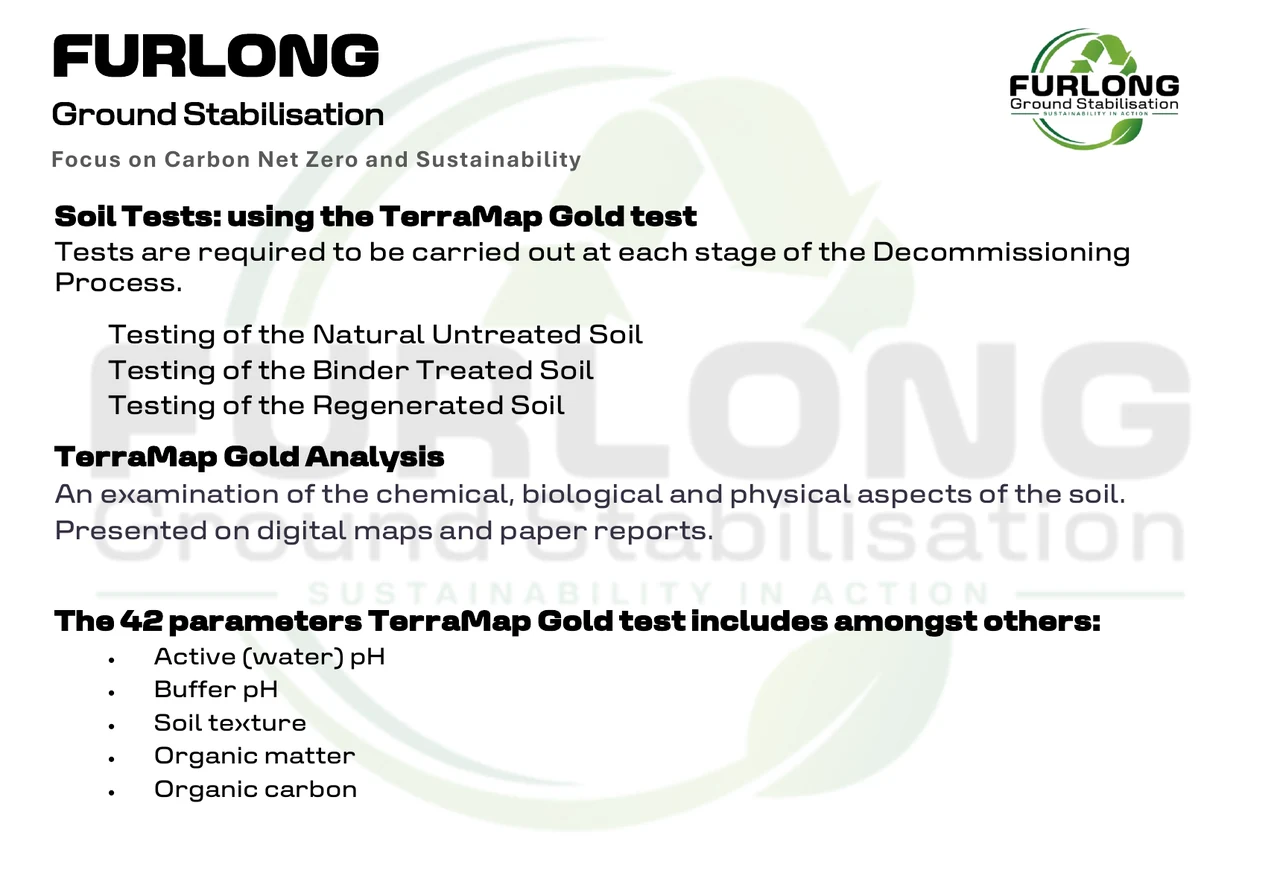
  • Active water pH and buffer pH
  • Soil texture, organic matter and organic carbon
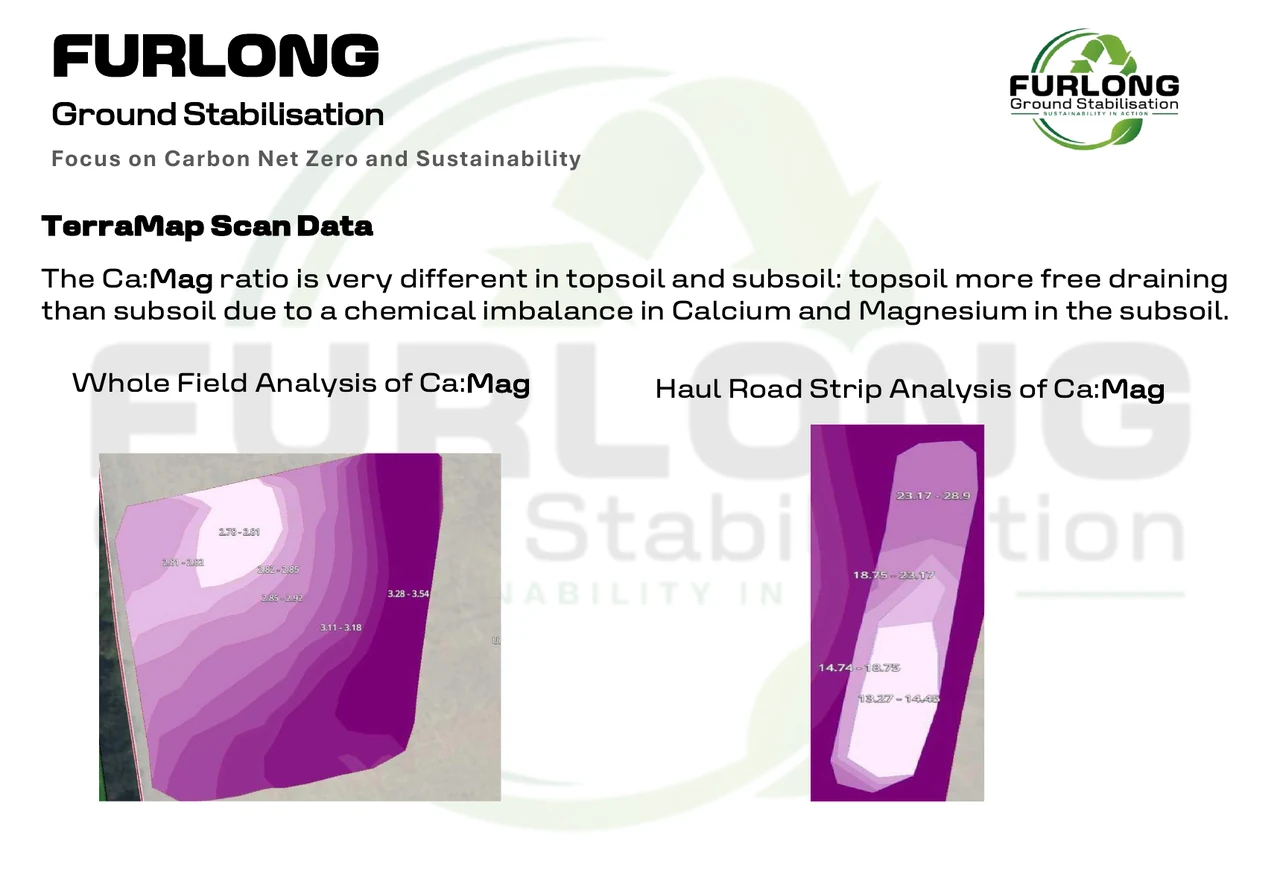
  • Ca:Mg ratio and nutrient balance from TerraMap scan data
  • Gold soil reports for untreated, cement stabilised and decommissioned states
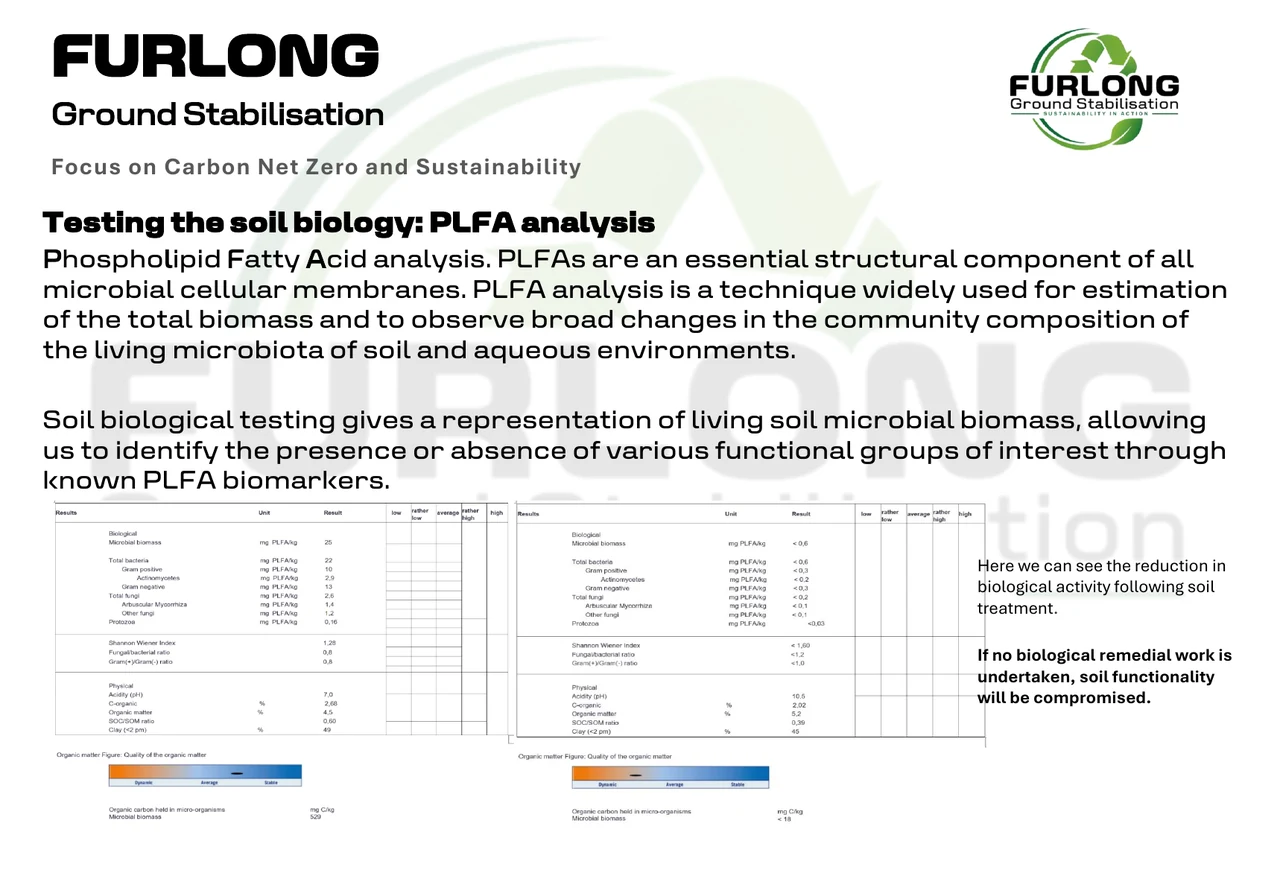
  • PLFA analysis to assess living microbial biomass and community composition
TerraMap Gold soil testing requirements for the decommissioning process
TerraMap Gold testing is required at each stage of the decommissioning process.
TerraMap scan data showing Ca to magnesium ratio differences
Ca:Mg ratio mapping highlights the difference between whole field and haul road strip data.
Gold Soil Analysis reports comparing natural, stabilised and decommissioned soil
Gold Soil Analysis compares the natural untreated, cement stabilised and decommissioned states.
PLFA soil biology analysis showing biological testing data
PLFA analysis indicates living soil microbial biomass and broad community changes.

What Stabilisation Changes

The presentation identifies pH, organic matter, microbial activity and soil structure as key limiting factors

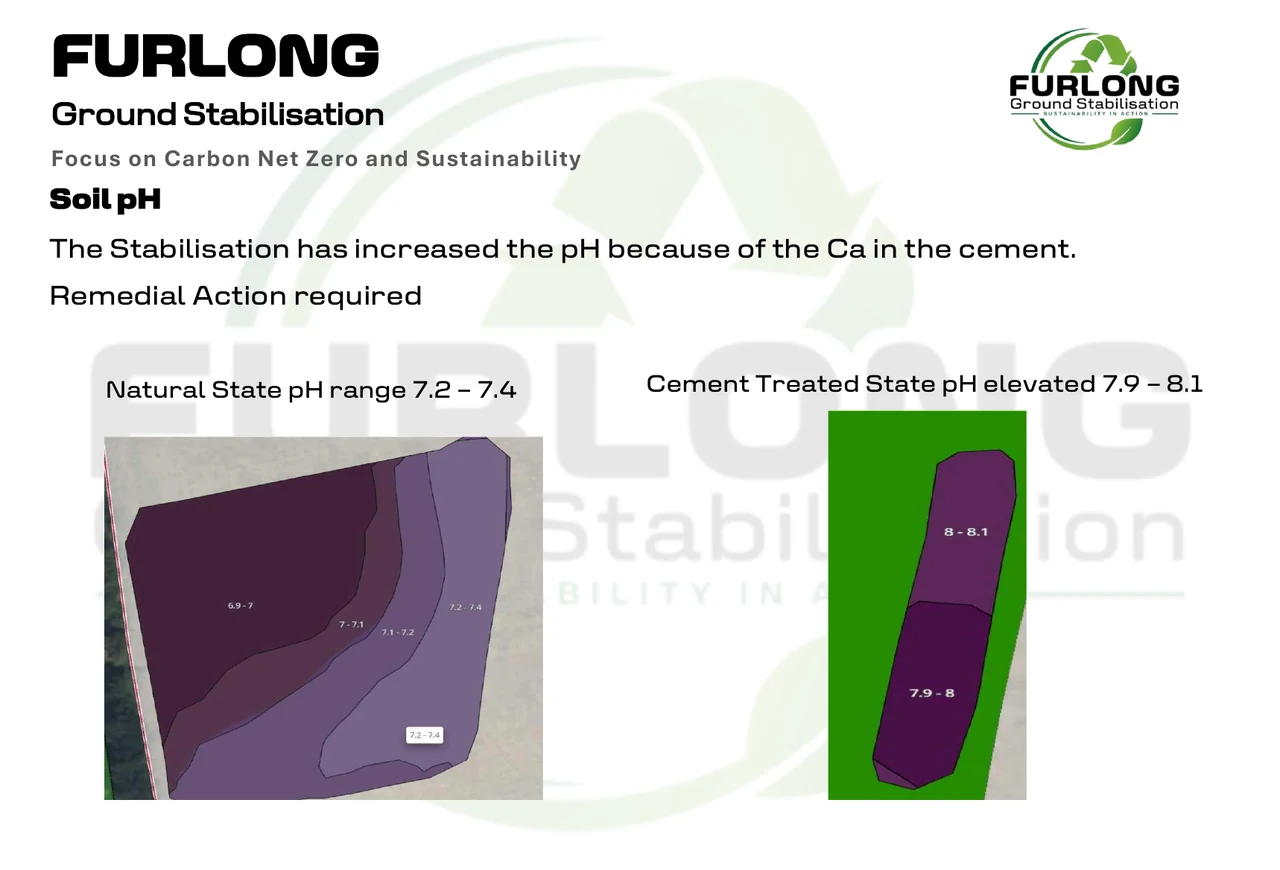
pH elevation

The presentation data shows natural pH at 7.2-7.4 and cement treated pH elevated to 7.9-8.1. Because the increase is driven by calcium in the cement, the reinstatement plan must include pH re-balancing rather than just surface reinstatement.

Soil pH maps comparing natural and cement treated pH ranges
pH comparison from the presentation: natural state versus cement treated state.

Organic matter and carbon movement

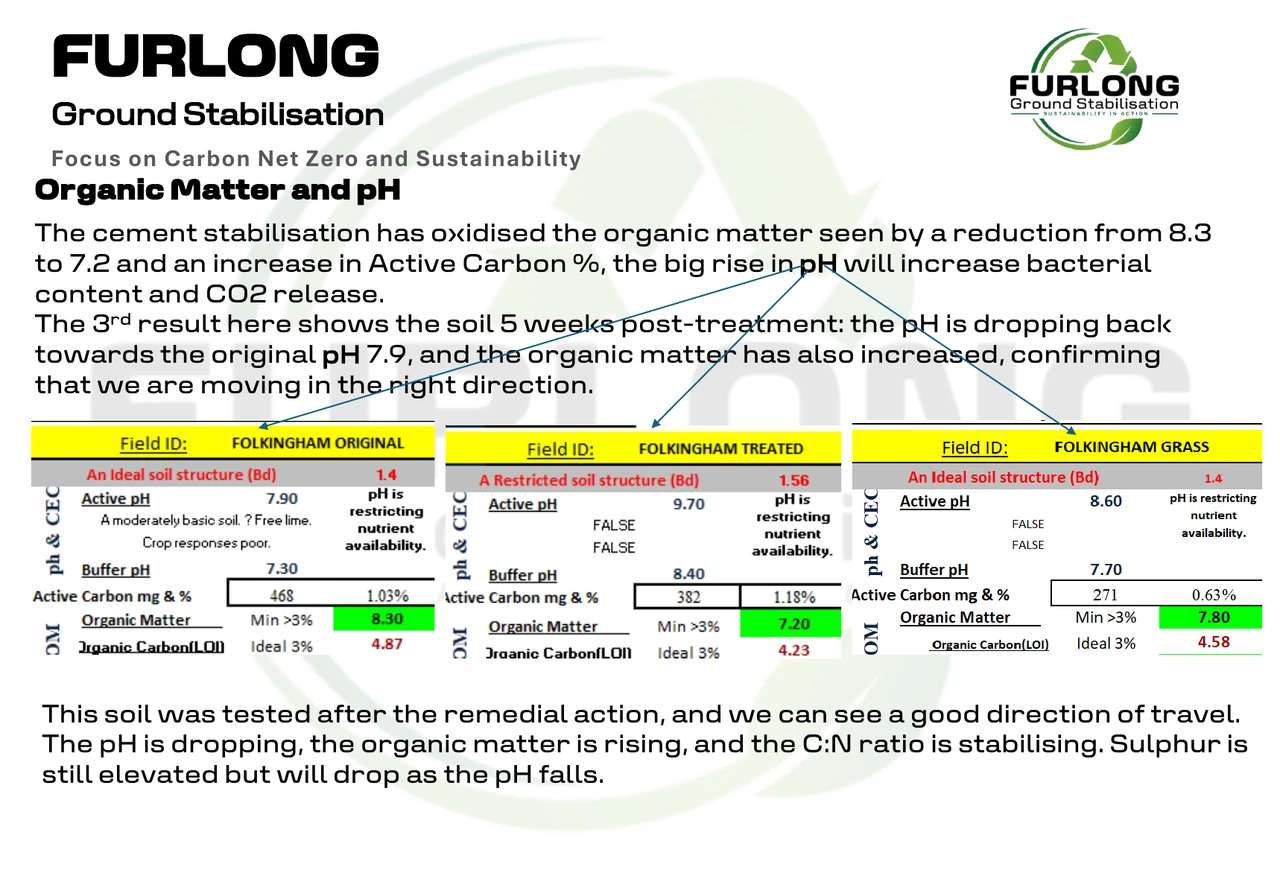
The presentation notes organic matter reducing from 8.3 to 7.2 after cement stabilisation, alongside an increase in active carbon. Five weeks after remedial treatment, pH is shown moving back towards the original condition and organic matter increasing.

Organic matter and pH test data before and after remedial action
Organic matter and pH data show the direction of travel after remedial action.

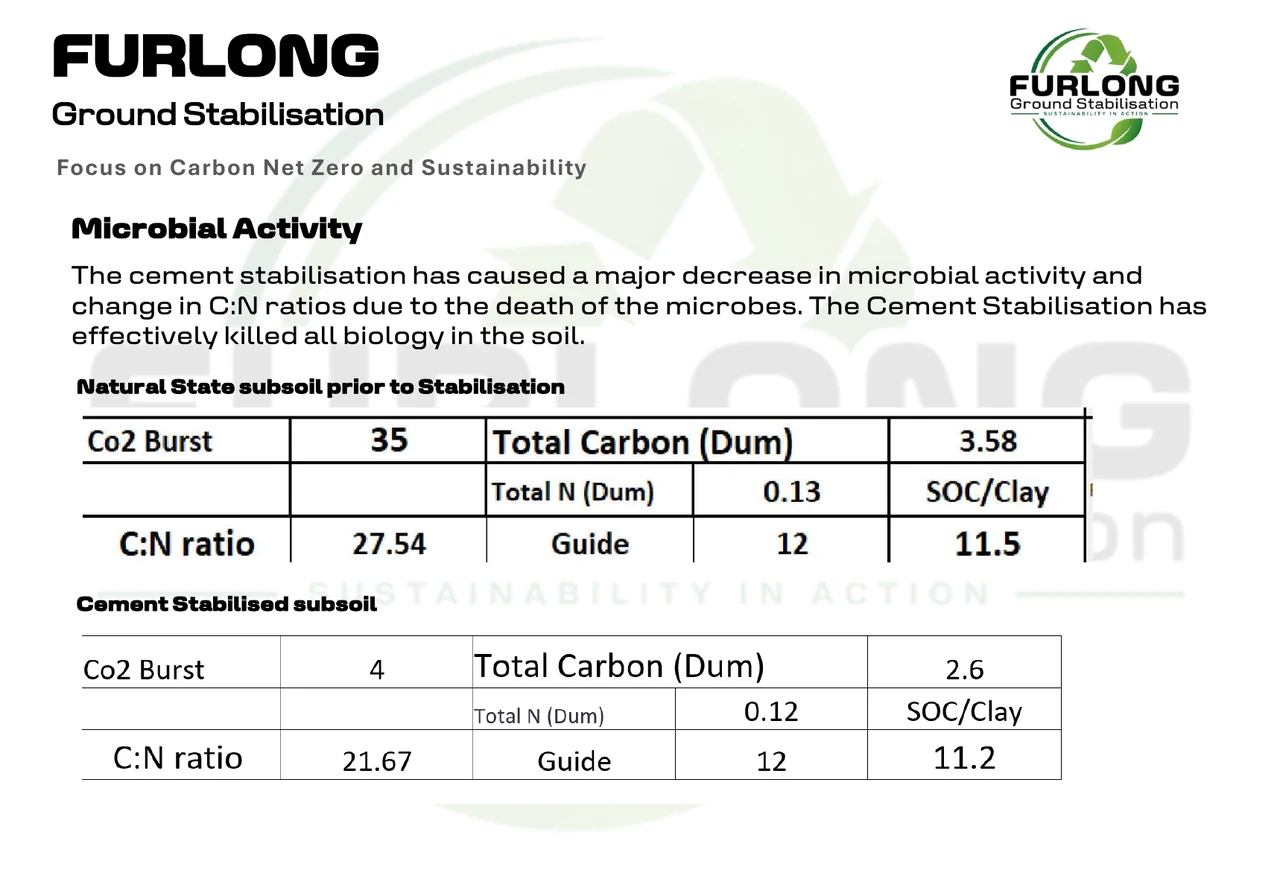
Microbial activity

The presentation states that cement stabilisation caused a major decrease in microbial activity and changed C:N ratios. Without biological remedial work, soil functionality is compromised.

Microbial activity data comparing natural subsoil and cement stabilised subsoil
Microbial activity comparison between natural subsoil and cement stabilised subsoil.

How the Process Works

Field activity follows the testing evidence: compact, pulverise, re-balance, seed and monitor

01

Stabilise and record

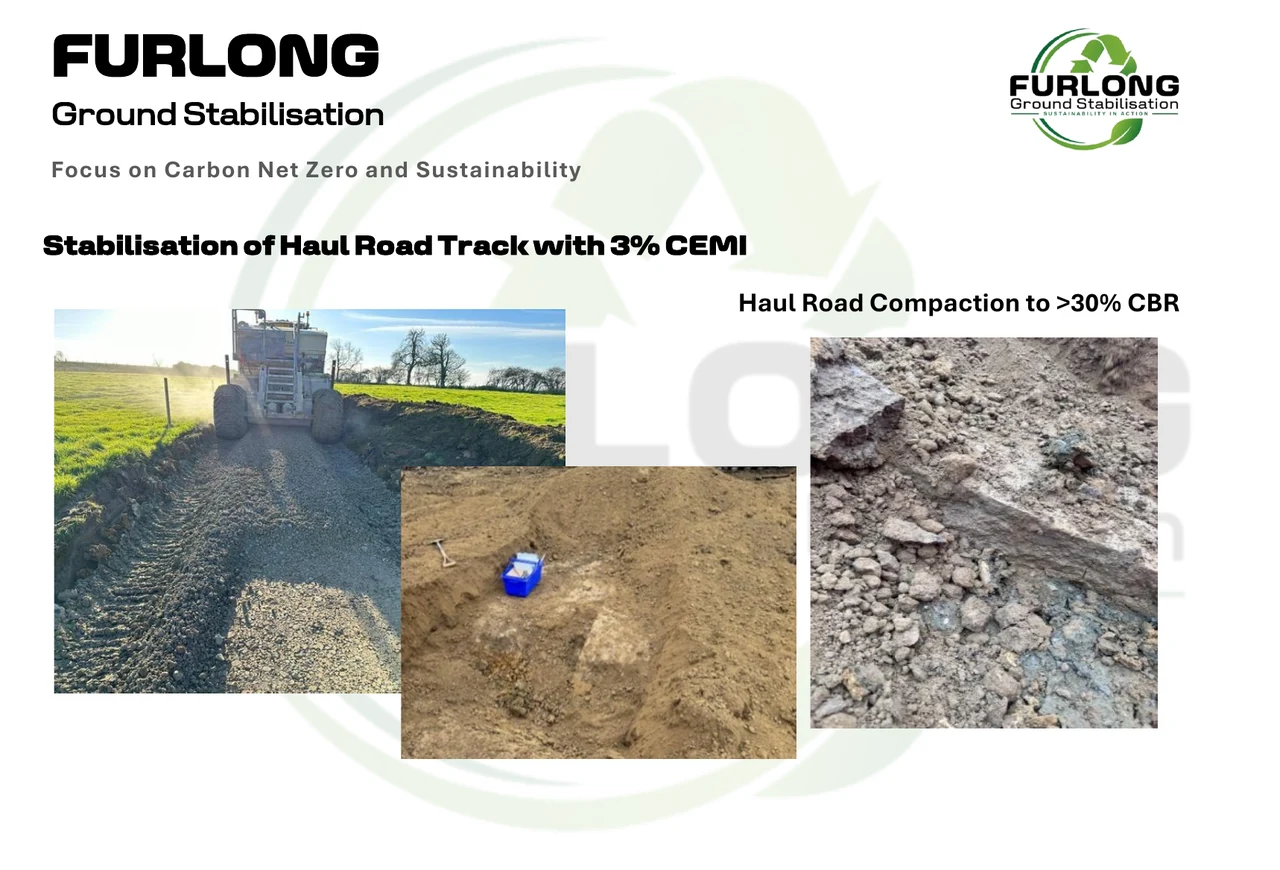
Haul road track stabilisation uses the agreed binder design, with compaction validated for temporary works performance.

02

Pulverise

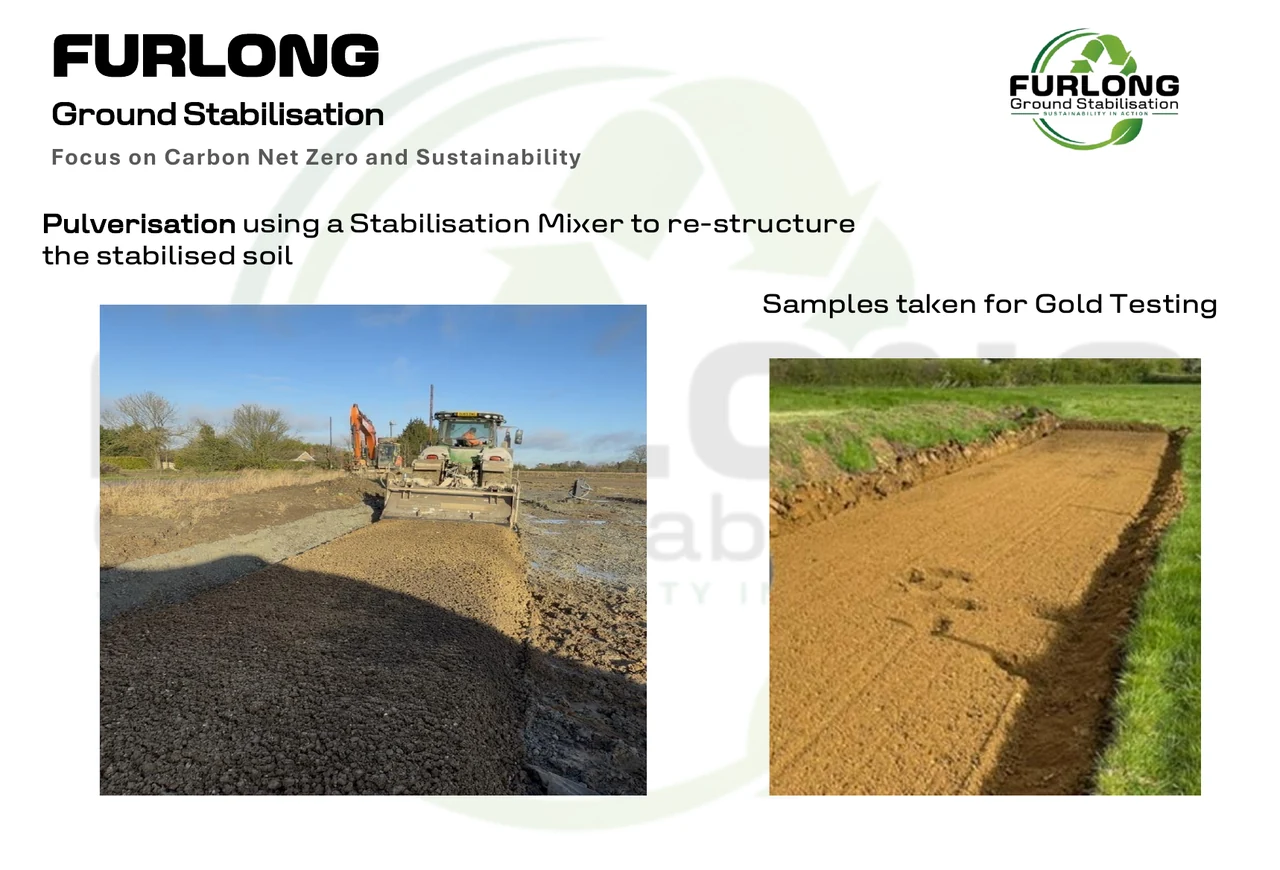
Use stabilisation mixing equipment to break down and restructure the treated material.

03

Re-balance

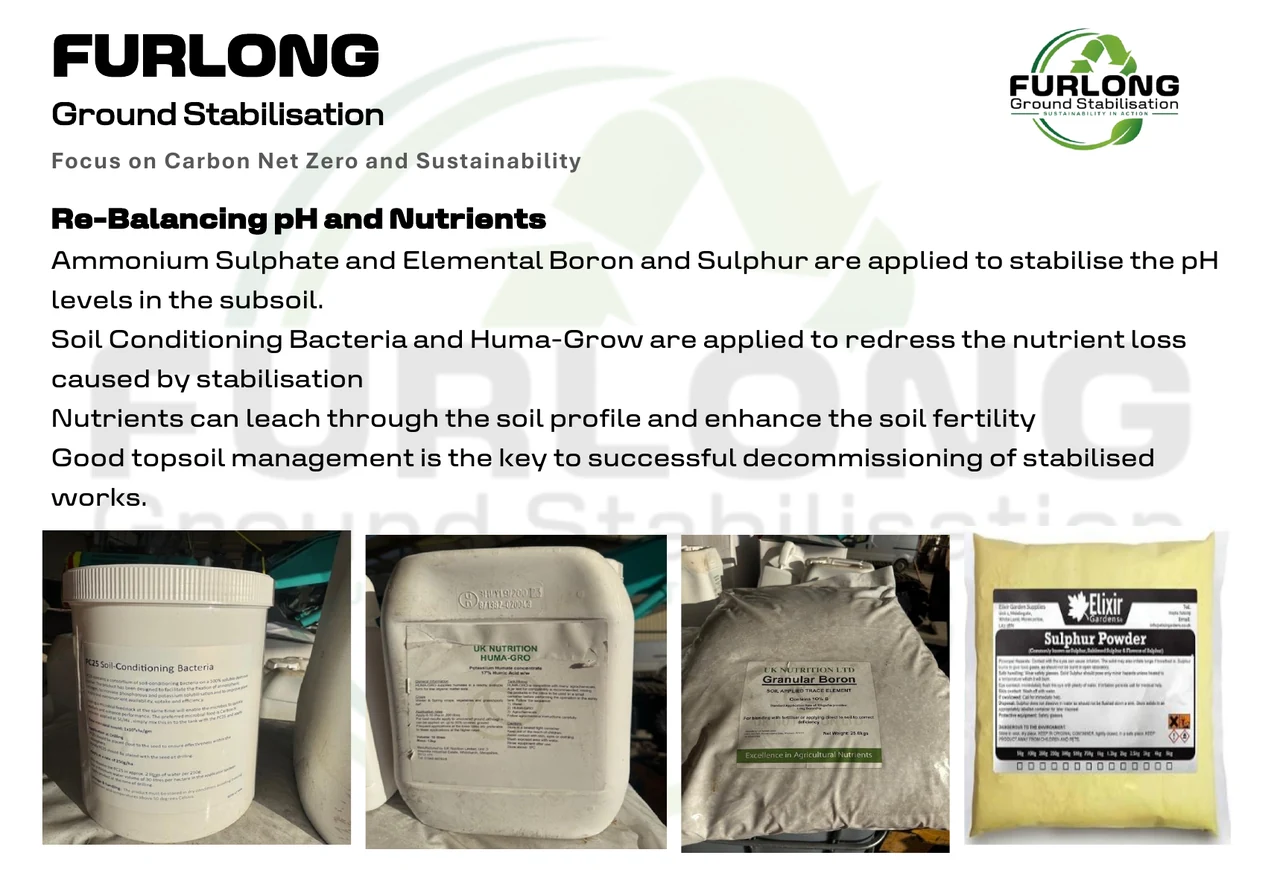
Apply targeted amendments to reduce elevated pH, restore nutrients and support organic matter.

04

Reintroduce biology

Use soil conditioning biology, humic inputs and native microbial support where the test results require it.

05

Seed and monitor

Establish cover crops or wildflower planting and monitor root development, pH movement and soil function.

From Temporary Works to Regenerated Soil

Field photos and treatment plan evidence from the presentation

Haul road stabilisation and compaction data from the presentation
Stabilisation of haul road track with 3% CEM I and compaction to greater than 30% CBR.
Pulverisation using a stabilisation mixer and samples for Gold testing
Pulverisation restructures the stabilised soil before Gold testing samples are taken.
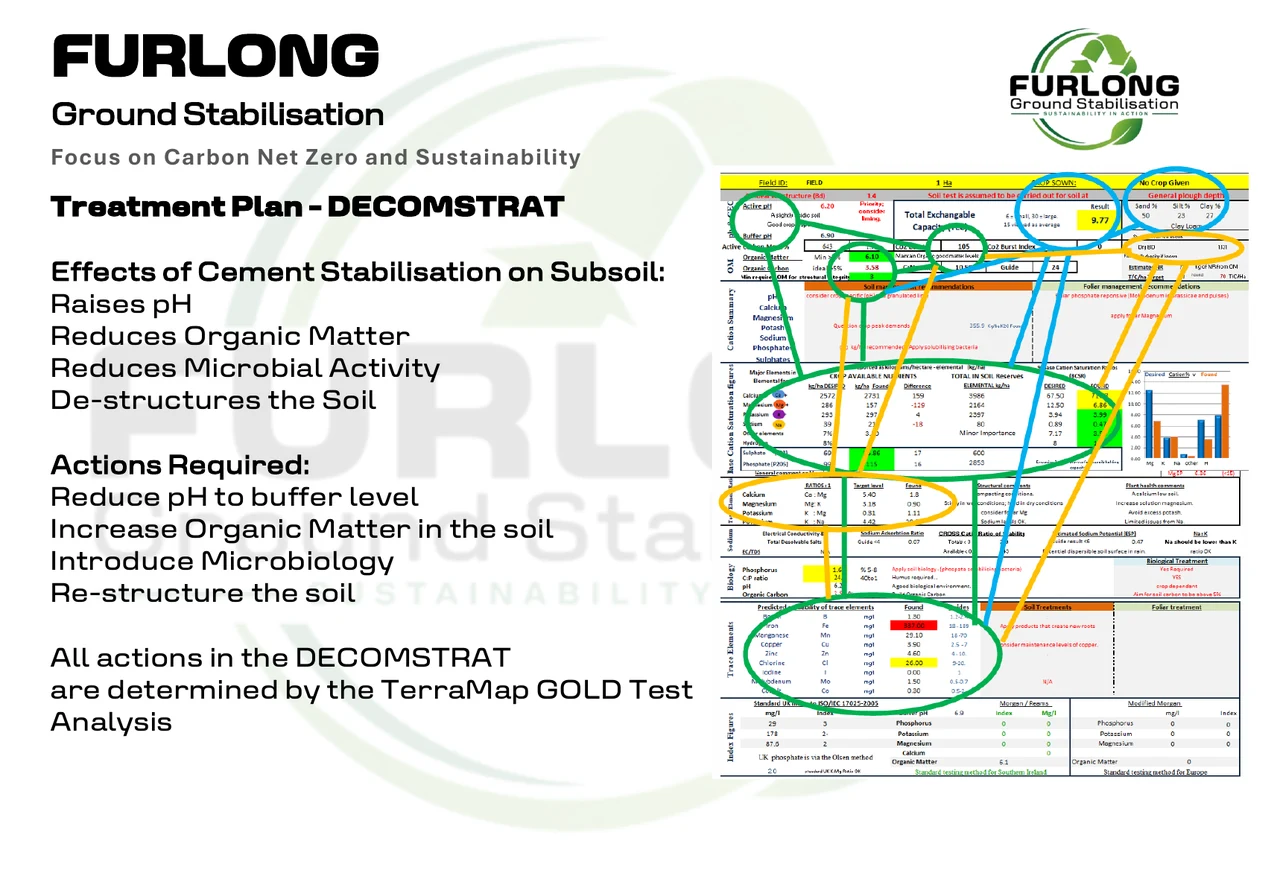
DECOMSTRAT treatment plan showing effects and required actions
DECOMSTRAT links the effects of cement stabilisation to the remedial actions required.
pH and nutrient re-balancing amendments from the presentation
pH and nutrient re-balancing uses targeted amendments and soil conditioning inputs.
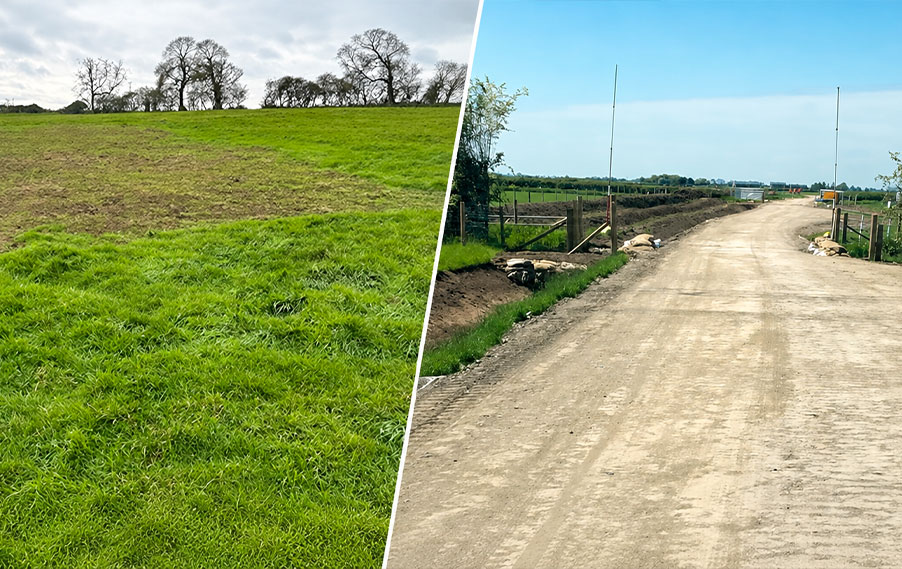
Prepared stabilised ground ready for decommissioning and reinstatement

What We Measure

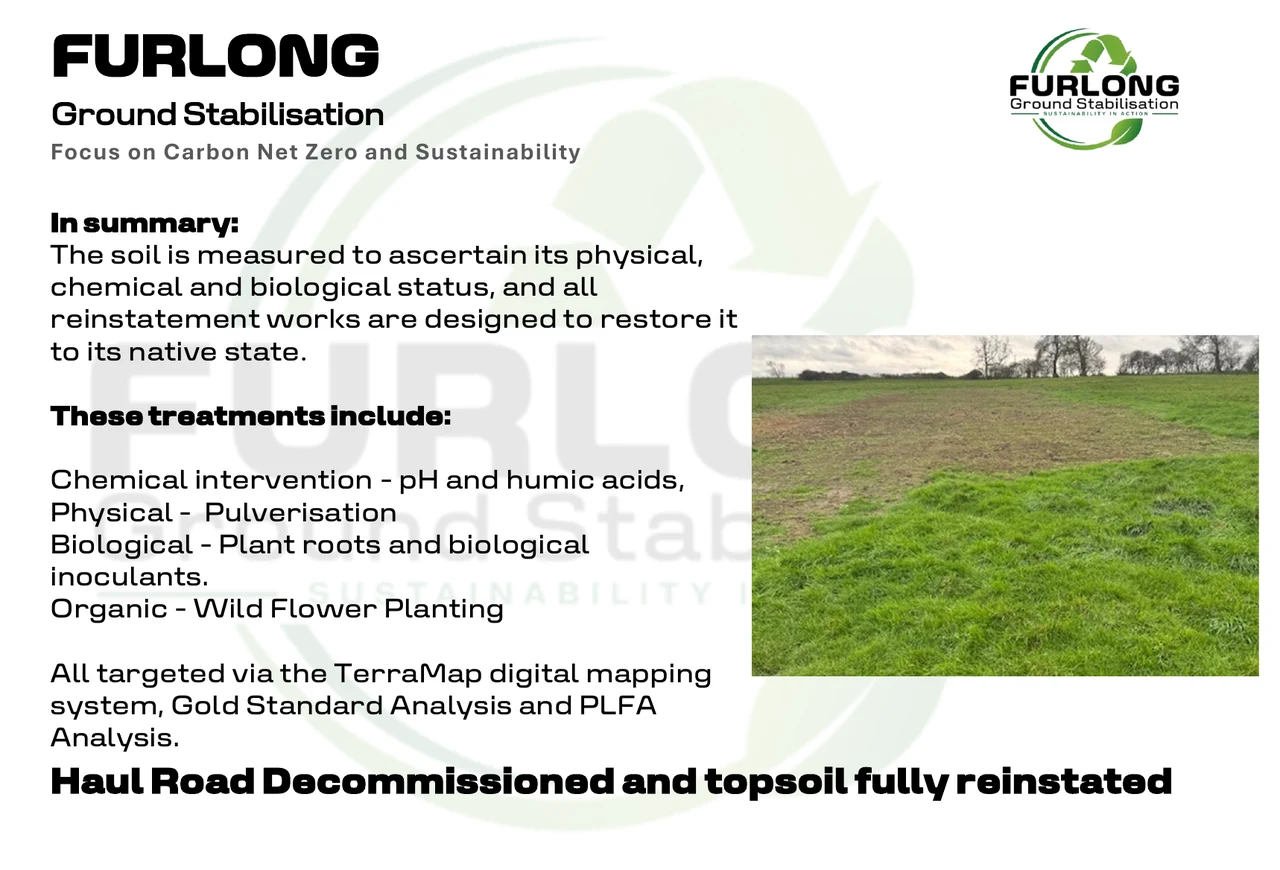
Decommissioning decisions are guided by the soil's physical, chemical and biological condition, not by a fixed recipe. The presentation summarises the treatment types as chemical intervention, physical pulverisation, biological inoculants and organic planting, all targeted through TerraMap, Gold Standard Analysis and PLFA analysis.

  • Chemical: pH and humic acid intervention
  • Physical: pulverisation and restructuring
  • Biological: plant roots and biological inoculants
  • Organic: cover crops and wildflower planting
  • Verification: TerraMap, Gold analysis and PLFA analysis

Regenerative Reinstatement

Seed establishment is used to rebuild organic matter and microbial activity

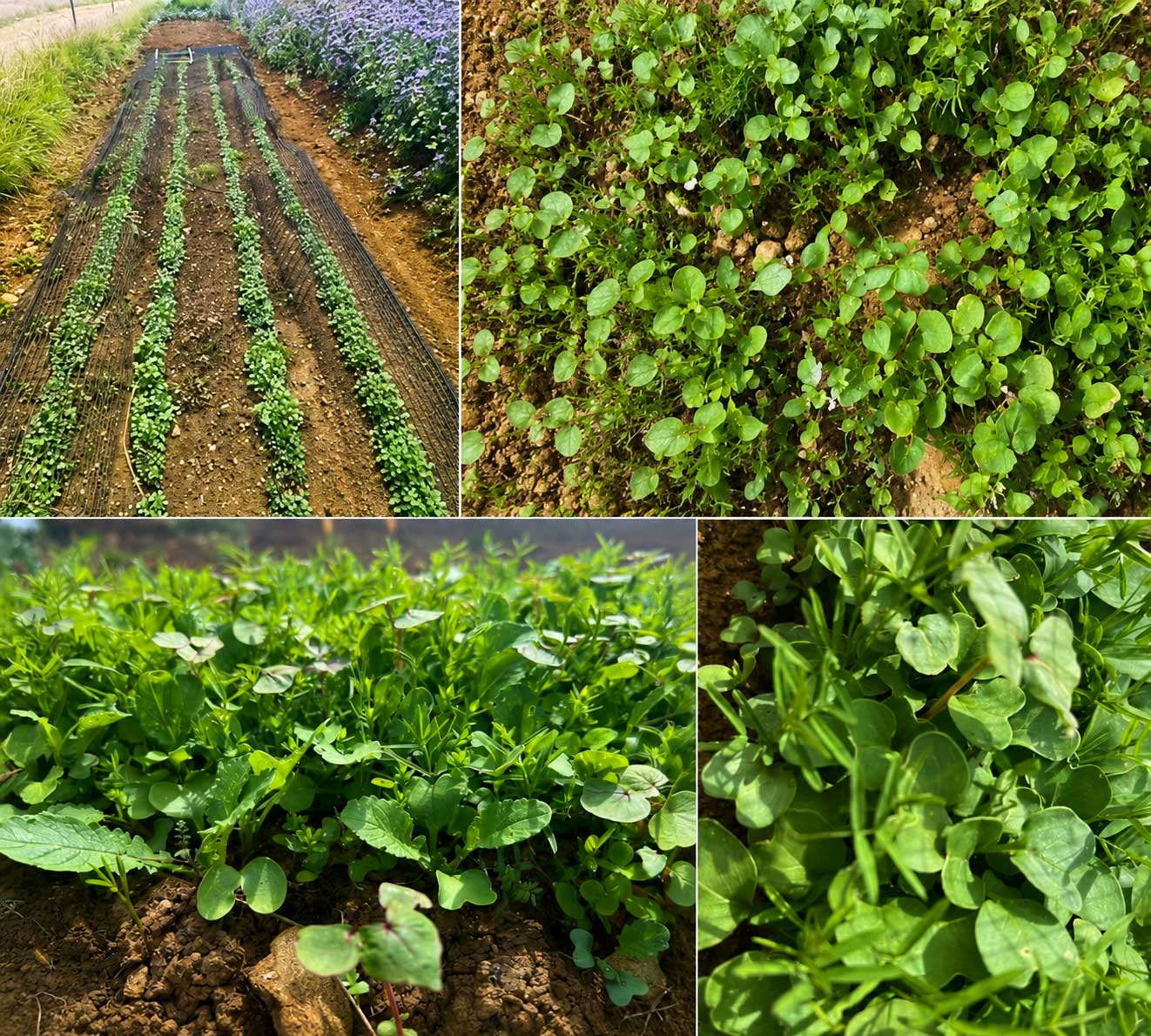
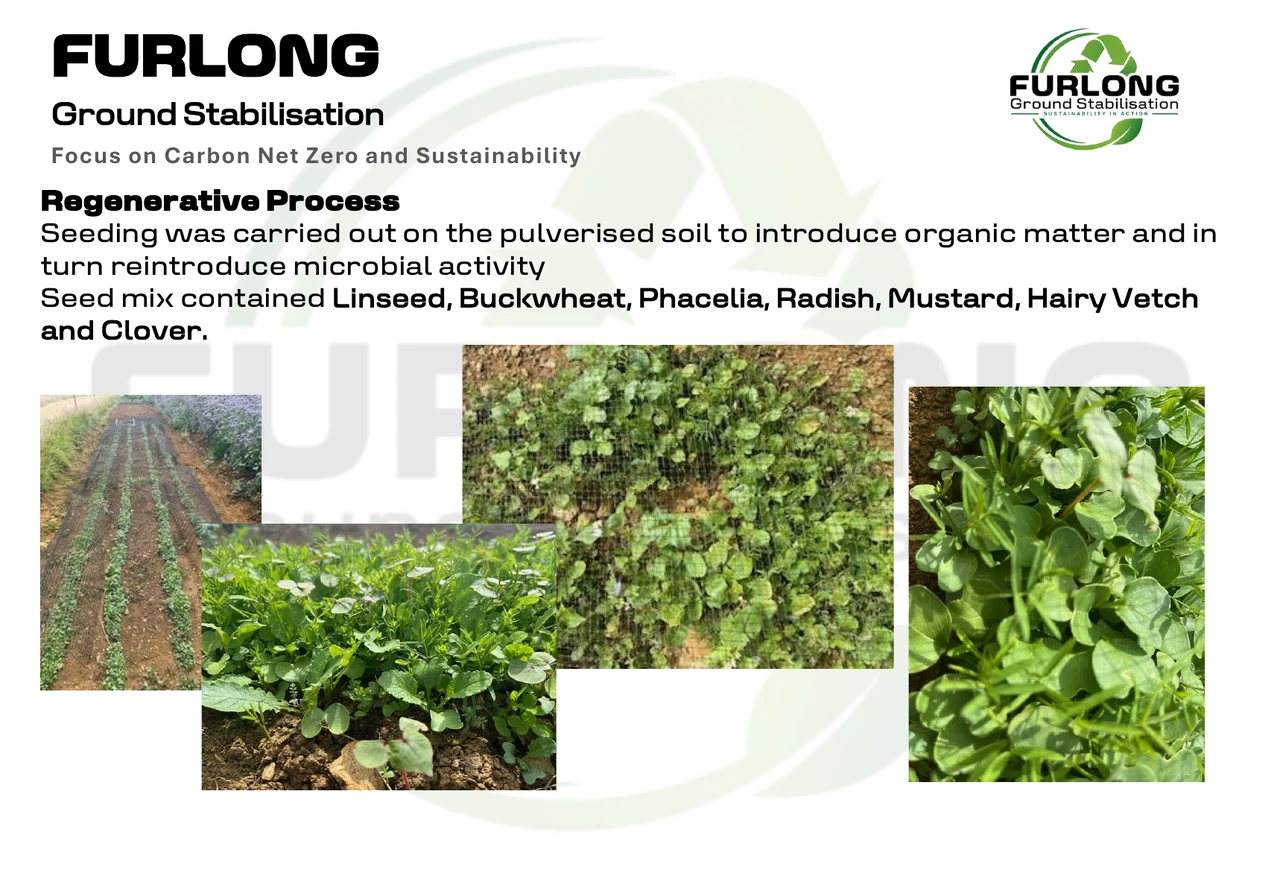
The presentation records seeding on pulverised soil to introduce organic matter and reintroduce microbial activity. The seed mix included linseed, buckwheat, phacelia, radish, mustard, hairy vetch and clover.

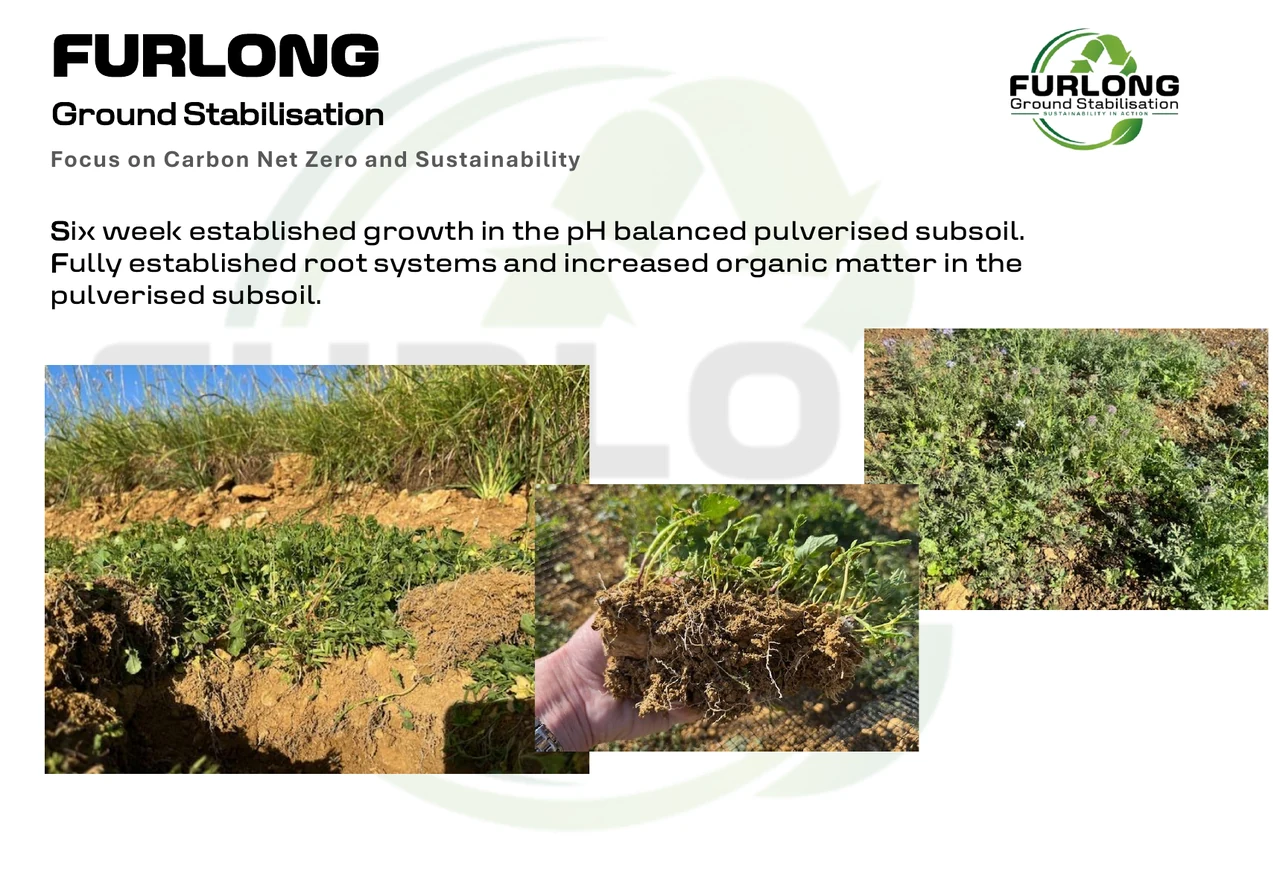
Six weeks after seeding, the presentation shows established growth in the pH-balanced pulverised subsoil, with fully established root systems and increased organic matter.

Presentation summary showing restored soil and treatment categories
Summary slide: reinstatement works are designed to restore the soil to its native state.
Regenerative process and seed mix photographs
Regenerative seeding introduces organic matter and supports microbial activity.
Six week established growth in pH balanced pulverised subsoil
Six-week growth shows root establishment and increasing organic matter in the pulverised subsoil.

Designed for Carbon Net Zero and Sustainability Goals

The process supports temporary works across the full life cycle: baseline measurement, construction performance, responsible removal and regenerative reinstatement.

Physical

Pulverisation and restructuring help return treated material to a workable soil profile.

Chemical

pH, nutrients, sulphur and humic inputs are managed according to soil test results.

Biological

Plant roots and biological inoculants help rebuild living soil function over time.

Organic

Cover crops and wildflower planting support organic matter, root systems and soil stability.

Planning temporary works that need reinstatement?

Speak to Furlong GS about testing-led decommissioning for stabilised haul roads, working platforms and temporary access routes.

WhatsApp